
Setting the Record Straight
A few emails and flyers are circulating in our community with alarming claims about the AIM Initiative. We respect everyone's right to civic engagement — but these materials contain serious factual errors and exaggerated claims.
Sausalito deserves an honest conversation about our waterfront — not one built misinformation designed to create fear, uncertainty, and doubt.
Below are our factual responses to these claims.
We invite you to read the initiative and our detailed FAQs at www.sausalitothrive.org/faq. If you have questions or concerns, let’s talk — just send us an email at info@sausalitothrive.org. We’re happy to meet with you.
-
This is the kind of claim with pictures of large waterfront condos designed to create fear and doubt, not inform. Read the actual initiative. AIM does not rezone for housing. It does not permit hotels. It does not open the door to condominiums or office parks.
What it does is the opposite: it finally gives our industrial and maritime roots room to grow and thrive. AIM removes the restrictions that have made it economically impossible to build workshops, boat repair facilities, fabrication spaces, and maritime workspaces. It allows fishermen to sell their catch, artists to sell their work, and makers to sell what they make — directly to the public.
For 40 years, Ordinance 1022 has made it unviable to build the very spaces a working waterfront needs. For example, this 40-year-old law prevents a boat repair business from building a big enough building to fit a gantry crane to be able to lift boats up to do repairs. AIM fixes that.
A thriving local working waterfront with active maritime businesses, busy artist and maker studios, a fish market on the water is not Miami Beach. There are a lot of examples of how other small waterfront towns have successful working waterfronts without becoming Miami Beach – and we can do it too, in our own salty, unique way.
-
The AIM Initiative expressly protects Arques shipyards and the ICB building against displacement. It states: “No new or additional use may displace the uses at ICB Building or shipways at the historic Arques Shipyard.” You can find this in the initiative on pages 5 and 215: sausalitothrive.org/initiative.
-
The 2020 data cited in a letter was collected during the Covid pandemic, when downtown Sausalito and other commercial districts were decimated due to a lack of tourism and residents not being able to frequent businesses. The Marinship was hit less hard as many of the businesses in this area are not resident or tourist facing, which is why the raw numbers make it look like a dominant performer.
Even using the author’s own 2020 numbers, the per-acre picture tells a different story. Downtown generated $16,000 per acre in tax revenue. The Marinship generated $6,800 per acre — less than half. In 2019, before Covid, the gap was far wider: downtown produced $70,000 per acre, the Marinship just $10,000. That is not economic strength — it is an enormous missed opportunity that hurts Sausalito overall.
It’s important to know that the Marinship spans over 200 acres while downtown is a fraction of that footprint running along a narrow strip of Bridgeway.
The author also makes a claim about business property tax revenues but provides no numbers to support it. We cannot verify a comparison that is not shown.
-
The diagram shows four buildings side by side, with a giant blue box on the right labeled "Proposed" — implying that's what the Marinship would look like under AIM. Here's what it leaves out:
The big building only applies to one zone. The Marinship has two zones. The 47-foot height limit applies only to the Industrial zone — the interior parcels away from the water. The Waterfront zone keeps its current 32-foot maximum, unchanged. The flyer shows one giant building as if it represents the whole Marinship. It doesn't.
47 feet is not unusual — or new. The ICB building already standing in the Marinship today is 65 feet tall. The "massive" building in the diagram would actually be shorter than what's already there.
Real buildings don't look like that diagram. Parking requirements, setbacks, and lot coverage limits all constrain what can actually be built on any parcel. A building that fills an entire lot to 47 feet is not permitted under AIM — or under any standard zoning code. The diagram ignores all of that.
What would actually get built? Think boat repair facilities tall enough to lift vessels out of the water. Working studios with enough ceiling height for large-scale fabrication. Maritime workshops that currently can't be built at all because the existing rules make them financially impossible.
AIM is about keeping our working waterfront working — by breathing new life into what it needs today, not 1985.
-
The 47-foot maximum applies ONLY in the Industrial (I) zone — and is still lower than the existing ICB building (65 feet) already on site today. The Waterfront (W) zone retains a 32-foot maximum, identical to the current limit. The letter’s diagram shows one enormous blue building labeled ‘Proposed’ with no mention of zone-by-zone distinctions. It is a visual trick — presenting a giant box, ignoring parking requirements, lot coverage, and setbacks, as if it applies to every parcel in the Marinship.
-
Ordinance 1022 served an important purpose in 1985. Thankfully, it stopped the waterfront from becoming an office park. But the world has changed. In 1985, there was no robust CEQA environmental review, no Bay Conservation and Development Commission oversight at its current strength, no modern design standards, and no community input requirements as we know them today. Those protections now exist and are strong. Building anything in California is already extremely difficult. Ordinance 1022 makes it functionally impossible. AIM does not remove oversight — it simply returns us to ‘extremely difficult,’ the same standard every other California city lives by.
-
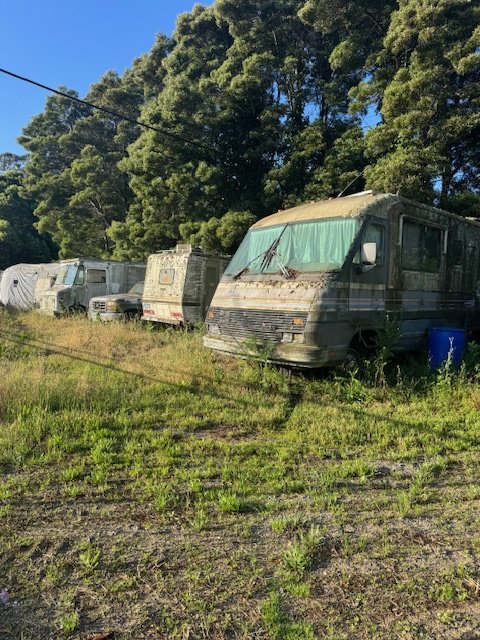
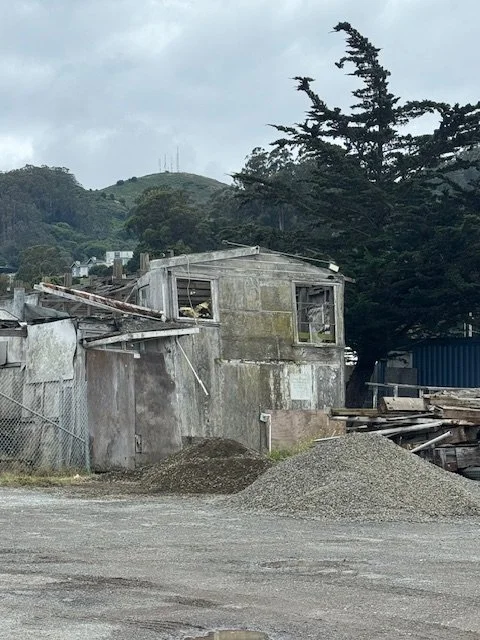
Our own zoning is a primary cause of blight in the Marinship. When it is economically impossible to build a viable structure under a 0.4 Floor Area Ratio (FAR) cap, property owners do not invest. That is not a conspiracy — it is math. AIM addresses the root cause by making investment viable again.
FAR stands for Floor Area Ratio — the relationship between the total size of a building and the size of the lot it sits on. Ordinance 1022 sets a FAR of 0.4 in the Marinship. That means on a 1,000 square foot lot, you can only build 400 square feet of usable space. Total.
Every architect and builder we have spoken with has the same reaction: “That’s absurd. You can’t build anything with that low of a FAR.” They are right. A 0.4 FAR makes it nearly impossible to construct a building that is economically viable — which is why virtually nothing new has been built in the Marinship in 40 years.
AIM raises the FAR to 3.0 in the Industrial zone, bringing it in line with comparable working waterfront towns across the Bay Area. That is not “massive density.” That is the minimum needed to build a real workshop, a boat repair facility, or an artist studio that actually works.
As for Blackstone: KKMI/Safe Harbor is a tenant of Clipper Yacht Harbor. They do not own property in the Marinship. Blackstone’s acquisition of Safe Harbor Marinas has no bearing on Marinship zoning. The Marinship’s future should be decided on its merits — not on the basis of a corporate ownership chain that has no property stake here.
-
The City’s own 2021 General Plan already calls for the Marinship Specific Plan to be retired. AIM replaces it with stronger, directly enforceable protections written into the initiative itself: the Arques Shipyard and ICB Building cannot be displaced; the Downtown Historic District is fully excluded; new commercial office buildings remain prohibited; and housing in the Marinship is not zoned by this measure.
-
AIM returns routine land-use decisions to normal city planning processes — the same way every other city in California operates. This includes public hearings, environmental review, and community input. Currently, even minor changes require a citywide election, which is why the 2010 Waterfront & Marinship Plan — which residents spent thousands of hours developing — was never implemented.
-
The opposite is true. Industrial rents in the Marinship are among the highest in the Bay Area — over $3/sq ft — compared to roughly $0.75/sq ft in Alameda for comparable space. Rents are high because supply is so constrained. More buildable space means more supply, which moderates rents. Cafés and small retail are complementary uses that support — not replace — working artists and maritime businesses.
-
Misleading Claim: AIM takes away the vote of the people. The Facts: The opposite is true. AIM is the vote of the people — placed on the ballot by Sausalito residents and will be decided by Sausalito voters. Ordinance 1022 was passed in 1985. Forty years later, today's residents deserve the same democratic opportunity to decide what our waterfront should become.
Fact vs. Fiction
KEY NUMBERS
$10K vs $70K/acre: Marinship contributed tax revenue to the City vs. downtown — across 200+ acres vs. a narrow strip of Bridgeway
$3+/sq ft: Current industrial rent in the Marinship — Bay Area’s highest, driven by artificial scarcity under Ord. 1022
~$0.75/sq ft: Comparable industrial rent in Alameda — where supply isn’t capped at 0.4 Floor Area Ratio, which prevents the building of new workspaces because it’s not economically viable.
40 years: Duration of Ordinance 1022 — producing virtually zero new artist studios, maker workshops or maritime workspaces.

THE VISION
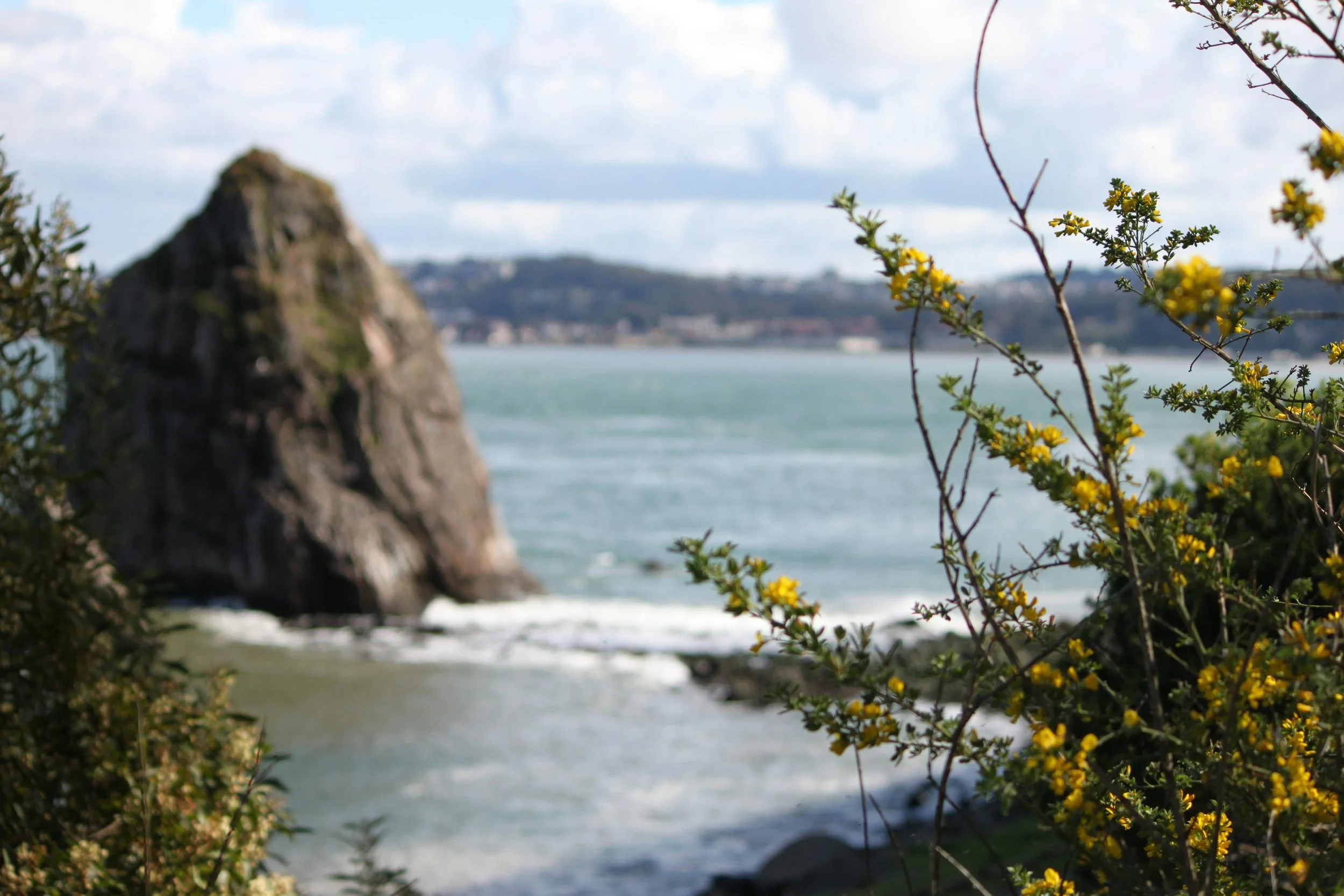
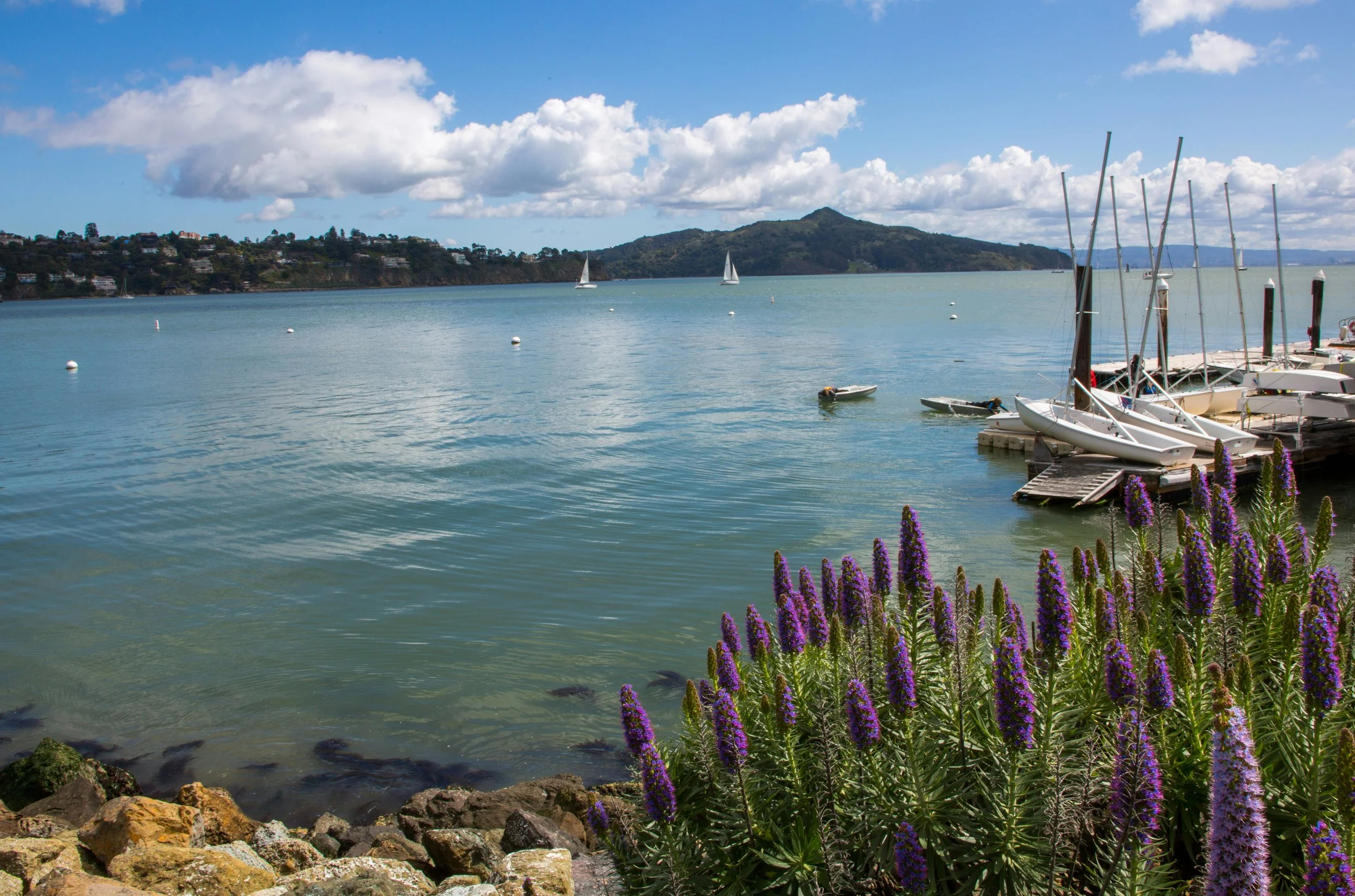
Our waterfront is special — where Liberty Ships were built during WWII and artists, makers, and creators still work alongside boat builders and skilled tradespeople.
AIM is designed to water these creative roots to cultivate a dynamic ecosystem where artists, makers, and maritime businesses, as well as the whole community, can thrive.
Other working waterfront towns similar in size to Sausalito — like Port Townsend, Washington; Newport, Oregon; and Belfast Harbor, Maine — have shown that this kind of vision can succeed.
Of course, Sausalito is one of a kind — and AIM gives our waterfront the creative freedom to evolve, innovate, and thrive in its own salty way.
WHAT AIM DOES:
1. Lets creators, makers, fishermen sell what they make, create and catch.
The current law prevents most businesses from selling what they make, create, and catch. For example, fishermen cannot form a cooperative to open a fish market on shore to sell their catch directly to residents. A commercial baker cannot open a retail counter in his or her own bakery. In fact, during covid a few of the commercial bakers in the Marinship tried to sell their fresh bread to residents but they were shut down by the City because its prohibited. An artist cannot regularly sell her work from her studio. A garment maker, a woodworker, metalworker, a ceramics artist — cannot have a small retail front.
2. Builds real workspaces for real maritime businesses.
Consider what it takes to build a modern boat repair facility: you need a building tall and large enough to house a gantry crane capable of lifting a vessel, something not possible with the current restrictive rules. Ordinance 1022's 0.4 Floor Area Ratio cap keeps allowable building sizes so small that new construction doesn't pencil out — making investment in the waterfront essentially impossible. Our own working waterfront law makes it impossible to build the very spaces a working waterfront needs. In 40 years, virtually no new studios, workshops, or maritime facilities have been built here. AIM creates real incentives for property owners to finally invest.
3. Creates a thriving waterfront for everyone.
Complementary businesses will be allowed like cafés and coffee shops alongside artists, makers, and maritime businesses — creating a dynamic, self-sustaining waterfront that both workers and residents can enjoy.
4. Fixes infrastructure without raising taxes.
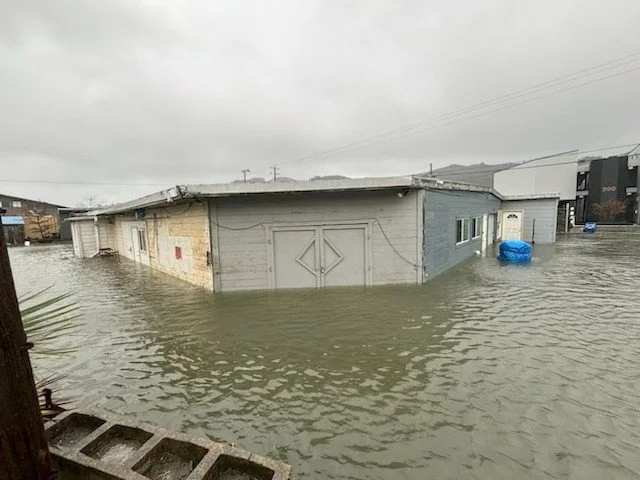
Streets flood at high tide. Seawalls are failing. The Marinship generates only $10K/acre in tax revenue vs. $70K/acre downtown — an enormous missed opportunity that hurts Sausalito overall. AIM is the first big step in 40 years to unlock the economic activity needed to fund repairs.
5. Protects what matters.
The Arques Shipyard, ICB Building, and Downtown Historic District are explicitly protected in the text of the initiative. AIM does not include housing, or new commercial office buildings.
6. Creates more ways for residents to enjoy the water.
AIM opens the door to water-based amenities that are prohibited under current rules — kayak launches, water taxis, and floating amenities, and even someday perhaps, a community saltwater pool.
7. Puts Sausalito back in charge of its waterfront.
Returns routine land-use decisions to normal city government process with rigorous checks and balances: Right now, Ordinance 1022 locks the City out of its own waterfront and industrial zone — routine land-use decisions, like fishermen opening a fish market or a boat repair shop building a structure tall enough to lift boats, require a costly citywide election just to move forward. And of course, that never happens — so nothing changes, ever. AIM returns these decisions to the normal city process: rigorous, with real checks and balances, and far from easy — but at least a process where something might actually happen.